
See How Much YOU Can Save - Call Today For A FREE Quote (877) 810-8872

Navigating Autumn Windstorms: What Commercial Auto and Inland Marine Policies Cover

October 21, 2026

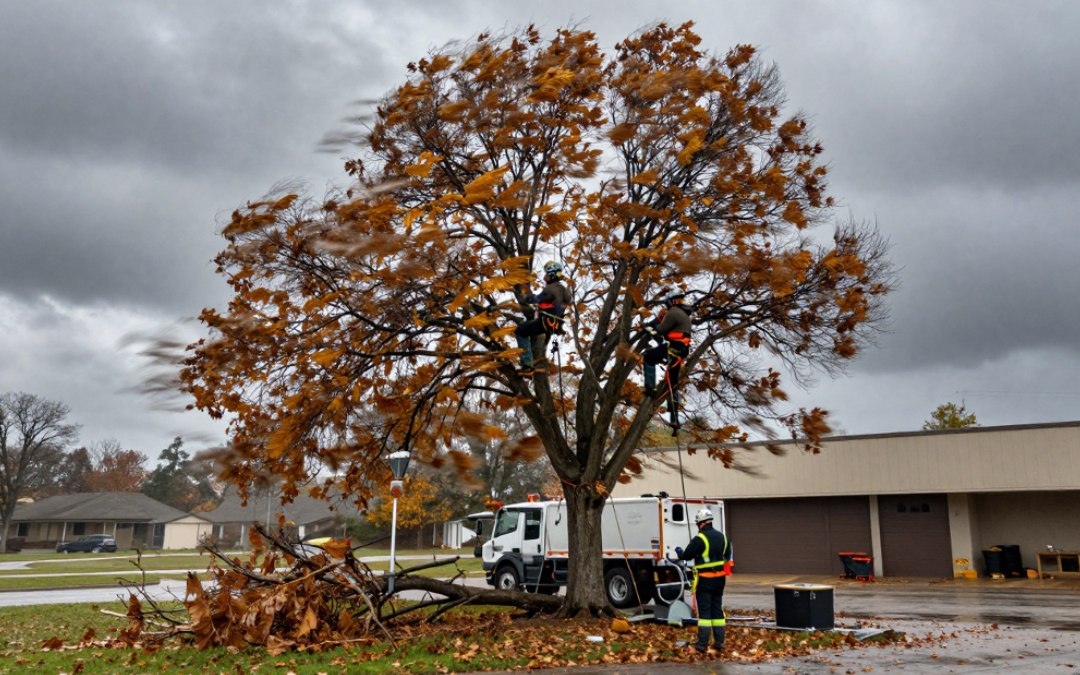
As weather patterns transition across Michigan, Indiana, Illinois, Minnesota, Iowa, and Wisconsin, October routinely brings high-wind events, early lake-effect systems, and sudden autumn windstorms. For commercial tree care businesses, severe weather creates an influx of emergency work. However, transporting heavy rigging gear, woodchippers, and harvested timber through treacherous roads and high winds elevates risk for your mobile assets.

Understanding how Commercial Auto and Inland Marine policies work together helps keep your mobile equipment, service vehicles, and crew financially protected throughout the storm season.

The Dual Exposure: Vehicles on the Road vs. Tools on the Job Site

Commercial tree care operations rely on two distinct categories of mobile property: vehicles designed for highway transport and specialized machinery used to perform arboricultural tasks. A standard commercial insurance setup separates these exposures into two primary coverages:

  1. Commercial Auto Insurance: Covers licensed road vehicles—such as bucket trucks, chip trucks, haulers, and utility pickups—against collision damage, third-party liability, and weather-related physical damage while driving on public roadways.
  2. Inland Marine (Equipment & Machinery) Coverage: Covers mobile tools and machinery—such as woodchippers, stump grinders, skid steers, chainsaws, and rigging gear—wherever they travel, whether secured in transit, parked at a job site, or stored in a yard.

Relying on Commercial Auto alone leaves a major gap: auto policies typically exclude the specialized equipment towed behind or carried inside your work trucks.

High-Wind Transport Risks and Insurance Protections

Autumn windstorms produce unpredictable hazards both during transit and while stationed at emergency storm response sites:

  • Trailer Sway and Rollover Damage: High crosswinds can destabilize trailers carrying heavy loads of timber or towed woodchippers, increasing the risk of jackknifing or highway collisions. Commercial Auto Physical Damage (Collision and Comprehensive) helps pay for repairs to the towing vehicle and trailer.
  • Falling Limbs and Debris on Work Trucks: Parked service trucks positioned under compromised trees during emergency limb removals can suffer heavy cab or windshield damage. Comprehensive Commercial Auto coverage addresses physical damage caused by falling objects and storm debris.
  • Equipment Damage in Transit: If a chipper or skid steer shifts, collides with debris, or suffers damage while being transported to a storm site, Inland Marine insurance steps in to repair or replace the equipment.

Key Policy Features Every Tree Care Business Should Review

Before autumn storm activity reaches its peak, commercial tree care business owners across the Midwest should review their current policy structures to verify complete protection:

  • Scheduled vs. Unscheduled Equipment Limits: High-value items like bucket trucks, cranes, and large woodchippers usually require specific scheduling on your Inland Marine or Commercial Auto policy. Smaller hand tools and chainsaws are typically covered under an unscheduled blanket limit.
  • Valuation Basis (Actual Cash Value vs. Replacement Cost): Determine whether your policy pays out based on depreciated value (Actual Cash Value) or the current cost to purchase new equivalent equipment (Replacement Cost).
  • Radius of Operation: Emergency storm response often takes crews across state lines. Verify that your Commercial Auto policy covers the full geographical distance your drivers travel across Michigan, Indiana, Illinois, Minnesota, Iowa, and Wisconsin.

Frequently Asked Questions

Does Commercial Auto insurance cover a towed woodchipper if it is damaged in a highway accident?

Standard Commercial Auto insurance covers physical damage to the towing truck and trailer, but it typically excludes the specialized machinery being towed. You need an Inland Marine (Equipment & Machinery) policy to cover the repair or replacement cost of the woodchipper itself.

What happens if a falling tree branch damages our bucket truck while parked at a job site?

Physical damage caused by falling limbs, windstorms, or severe weather to a parked work vehicle is covered under the Comprehensive coverage portion of your Commercial Auto policy.

Does Inland Marine insurance cover tools and equipment stolen from a job site during an emergency storm cleanup?

Yes, Inland Marine insurance (often called an Equipment Floater) provides mobile property coverage against theft, vandalism, fire, and collision loss whether your tools are in transit, locked in a truck, or actively in use on a job site.

Managing autumn windstorm cleanup requires fast response times and dependable equipment. Verifying that your mobile machinery and commercial fleet carry the right combination of Commercial Auto and Inland Marine coverage helps your tree service company handle emergency calls without taking on unmanageable financial risk.

To review your Commercial Auto and Inland Marine coverage limits or request a customized insurance proposal tailored to your Midwestern tree care business, contact us online or call Tree Trimmers Insurance, a division of John Scott Insurance, at (877) 810-8872.
Preparing Your Tree Care Business for Q4: Payroll Audits, Seasonal Shifts, and Policy Reviews

October 14, 2026

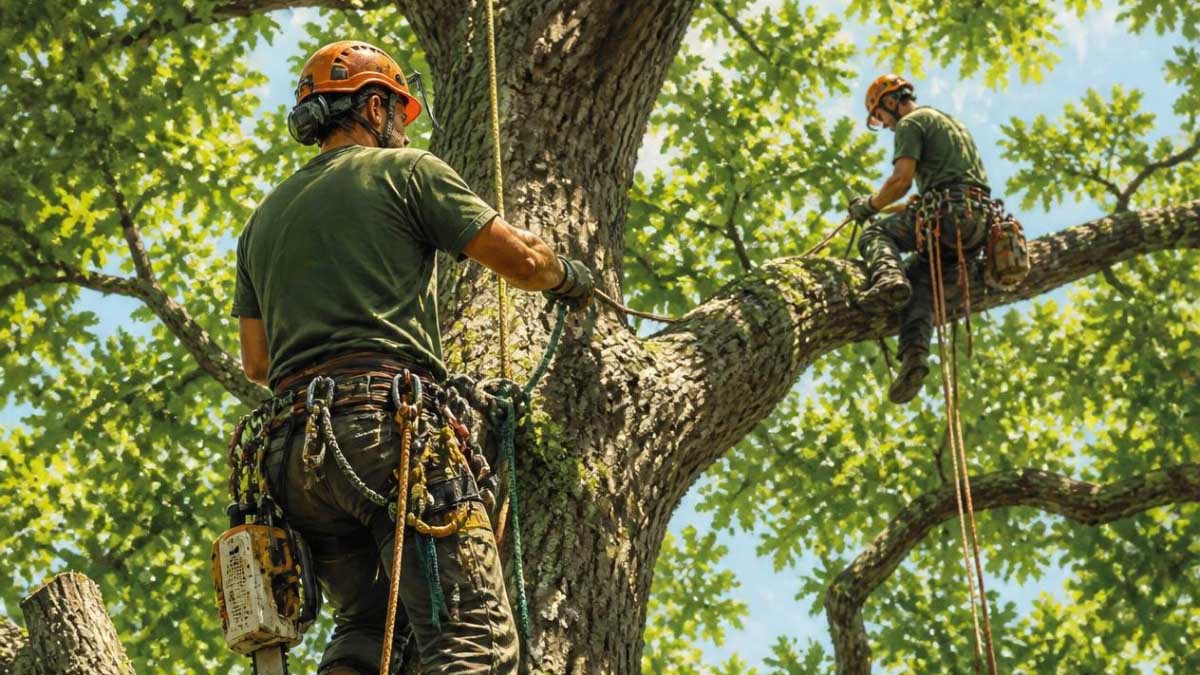
As September transitions into the final quarter of the year, tree care contractors across the Midwest face a shift in operations. Peak summer removals and storm cleanup begin to cool, crew sizes adjust, and business owners turn their attention toward Q4 budgeting, year-end tax planning, and upcoming insurance audits.

Managing cash flow during seasonal transitions requires active insurance oversight. For arborist businesses operating in Michigan, Indiana, Illinois, Minnesota, Iowa, and Wisconsin, Q4 is the critical window to review payroll reporting, audit class codes, and adjust coverage limits before winter weather impacts job volume.

Navigating Seasonal Payroll Adjustments in Q4

Workers’ compensation premiums are directly linked to payroll. When crew sizes scale back after summer, maintaining static payroll estimates leads to overpaying on monthly premiums.

Aligning Monthly Reporting with Actual Payroll

If your policy uses a monthly self-reporting structure or pay-as-you-go system, updating payroll figures as seasonal workers exit ensures premiums mirror actual risk exposure.

For fixed-payroll estimated policies:

  • Mid-Year Adjustments: Request an endorsement to reduce estimated payroll for Q4 if crew size drops significantly.
  • Cash Flow Management: Adjusting estimates quarterly prevents tying up capital in premium overpayments that wouldn't be returned until after the annual audit.
Classifying Ground Crew vs. High-Canopy Workers

Properly separating payroll by duty type is essential. High-canopy climbing carries significantly higher rate factors than ground support or administrative roles.

Employee RoleTypical Risk ExposurePayroll Strategy
Climbers & Bucket OperatorsHigh-altitude, rigging, high-rate factorTrack hours strictly to avoid over-assigning lower-risk hours to high-rate codes
Ground Crew & Chipping StaffModerate exposure, ground equipment focusMaintain separate log entries for ground-only operations where state rules permit
Sales & Administrative StaffLow-risk office exposureSeparate out clerical payroll completely to utilize low administrative rate codes

Preparing for Your Annual Workers' Compensation Audit

Most workers’ compensation policies trigger an audit shortly after the policy term closes. Going in unprepared can lead to unexpected premium adjustments and back-billing.

Essential Audit Documentation Checklist

Gather these records ahead of your Q4 audit:

  • Detailed Payroll Records: Gross pay breakdowns, individual timecards, and quarterly tax filings (IRS Form 941).
  • Certificates of Insurance (COIs) for Subcontractors: Verify that every independent contractor or 1099 worker utilized during peak season provided a valid COI. Missing subcontractor COIs result in the insurer charging full workers' comp rates for those workers.
  • Owner/Officer Exclusion Forms: Ensure signed state exemption forms are current if officers or owners opt out of coverage.
Understanding State Audit Rules in the Midwest

Statutory rules governing audit reporting and class codes vary across MI, IN, IL, MN, IA, and WI. Working with an agency familiar with regional audit standards helps with proper payroll allocation and prevents misclassification penalties.

Managing Your Experience Modification Rate (EMR) in Q4

Your Experience Modification Rate (EMR) directly impacts overall policy costs. A Mod Factor below 1.0 yields premium discounts, while a factor above 1.0 adds surcharges.

  • Review Open Claims: Contact your claims handler to review open claims before year-end reserves are locked in by rating bureaus. Closing inactive claims or reducing inflated reserves helps protect your upcoming EMR.
  • Reassess Winter Safety Standards: Transitioning into Q4 means shorter daylight hours, colder conditions, and frozen ground. Updating fall safety protocols directly reduces late-season injury claims.

Pre-Winter Equipment & Fleet Reviews

Inland Marine (Equipment Floater) and Commercial Auto policies should be reviewed before machinery is winterized or stored.

  • Winter Storage Adjustments: If bucket trucks or chippers are taken off the road during winter months, check if your commercial auto policy allows for lay-up provisions (suspending liability coverage while maintaining comprehensive/storage coverage).
  • Equipment Valuations: Review scheduled equipment values to ensure newly acquired machinery is listed and retired equipment is removed.

Frequently Asked Questions (FAQ)

Q: How does seasonal hiring impact workers' compensation for tree trimmers in Q4?

A: As crew sizes scale down after peak summer, reporting accurate payroll changes prevents overpaying on monthly workers' comp premiums and reduces unexpected adjustments during your annual audit.

Q: What happens if a subcontractor doesn't have insurance during an audit?

A: If an independent contractor cannot provide a valid Certificate of Insurance covering the period worked, the audit treats them as an employee, adding their entire pay to your payroll calculation under the highest applicable risk class code.

Q: Can I lower my commercial auto premiums if my trucks are parked for the winter?

A: Yes, many policies allow comprehensive-only coverage (or lay-up status) during extended downtime, protecting vehicles against theft, fire, or weather damage while eliminating driving-related liability costs.

Partner with Midwest Arborist Insurance Specialists

Since 1960, John Scott Insurance has helped commercial tree care contractors protect their operations and manage policy costs. As a dedicated division focused entirely on tree trimming risks, Tree Trimmers Insurance brings specialized knowledge to business owners across Michigan, Indiana, Illinois, Minnesota, Iowa, and Wisconsin.

  • Audit Support: Guidance through workers' comp audits to prevent costly misclassifications.
  • Custom Coverage Packages: Tailored policies built specifically for tree trimmers and arborists.
  • Cost Management: Aligning payroll, fleet, and equipment schedules to your seasonal workflow.

Ready to optimize your coverage and prep for Q4 audits? Contact Tree Trimmers Insurance today for a FREE policy review or call toll-free at (877) 810-8872.

Residential Tree Care Insurance: Essential Coverage for Home-Focused Tree Service Operations

October 8, 2026

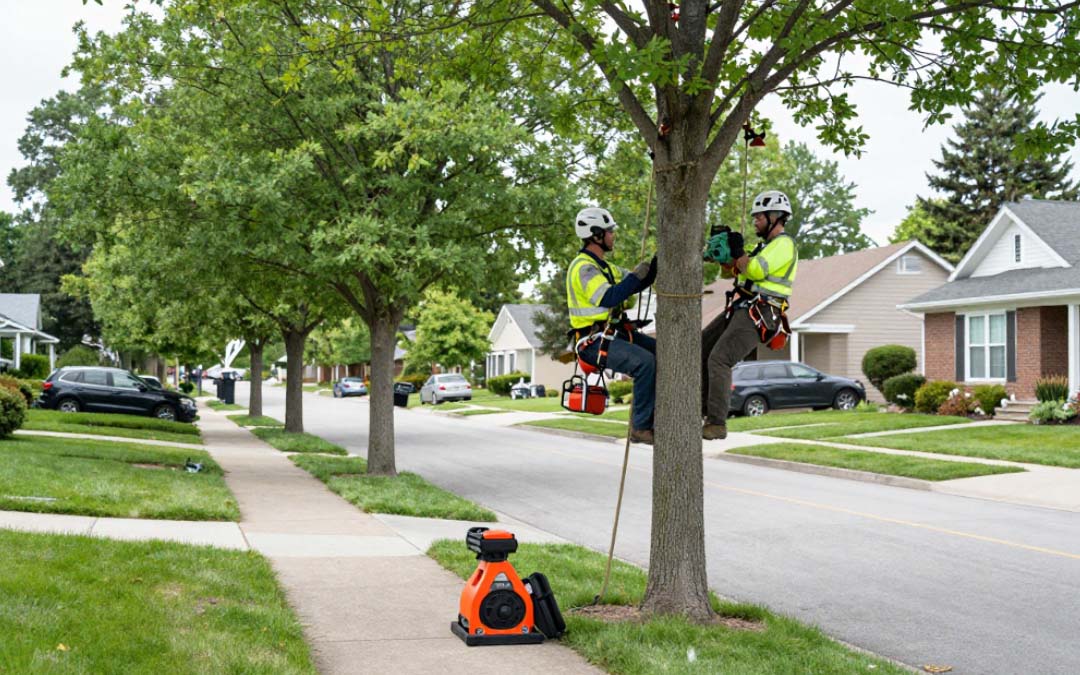
Running a tree service business that focuses solely on residential properties requires a unique approach to risk management. While residential jobs may not involve the large-scale land clearing or municipal road work of commercial projects, working near homes, garages, power drop lines, and manicured lawns introduces constant, high-frequency liability exposures. Understanding how commercial insurance is structured for residential tree trimmers across Michigan, Indiana, Illinois, Minnesota, Iowa, and Wisconsin helps business owners protect their company assets while satisfying homeowner expectations.

The Unique Risk Profile of Residential Tree Trimmers

Residential tree work brings crews into close quarters with high-value private property and household residents. Common operational hazards include:
  • Structural Proximity: Felling limbs or removing trees near roofs, gutters, solar panels, overhead utility drops, and neighboring properties increases the chance of property damage claims.
  • Property Access & Underground Utilities: Navigating tight backyard gates with skid steers, mini-excavators, or stump grinders can damage underground sprinkler systems, septic fields, or delicate landscaping features.
  • Homeowner & Visitor Foot Traffic: Unlike restricted commercial construction sites, residential yards often feature unexpected activity from homeowners, children, pets, or neighbors walking near active drop zones.

Core Insurance Policies for Residential Tree Service Companies

Even if your business never bids on a commercial contract, operating legally and sustainably in the Midwest requires a core portfolio of business insurance policies:
Commercial General Liability (CGL) Insurance
General liability is the foundation of residential tree care protection. It handles third-party claims alleging bodily injury or physical property damage caused by your operations. If a rigging line slips and a limb falls through a homeowner's picture window or damages a neighbor's parked car, General Liability helps pay for repairs, legal defense, and settlement costs.
Workers' Compensation Insurance
Residential tree work involves high-risk tasks like climbing, aerial lift operation, chainsaw usage, and heavy lifting. Workers' Compensation covers medical expenses, lost wages, and rehabilitation costs if a crew member suffers an injury on the job. Maintaining proper Workers' Comp is vital, as homeowner policies typically exclude coverage for hired contractors injured on their property.
Commercial Auto Insurance
Transporting crews, chippers, and hauling wood to and from residential driveways requires specialized commercial auto coverage. Personal auto policies explicitly exclude vehicles used for commercial tree service activities. Commercial Auto protects your bucket trucks, chip trucks, and trailers against collisions, liability claims, and weather-related damage.
Inland Marine (Equipment & Machinery) Insurance
Your specialized tools—chainsaws, stump grinders, rigging gear, and chippers—are mobile assets. Inland Marine coverage protects this equipment against theft, vandalism, fire, or damage while in transit or stored overnight at a residential job site.
Key Coverage Differences: Residential vs. Commercial Tree Care
Business owners shifting focus exclusively to residential properties should keep these key insurance distinctions in mind:
Coverage Consideration Residential Focus Commercial / Municipal Focus
Certificate Requirements Homeowners often request proof of insurance before signing a quote. Commercial entities require formal Certificates of Insurance (COI) naming them as Additional Insured.
Policy Limits Typical policy limits start at $1,000,000 / $2,000,000 General Liability limits. Higher baseline limits, often requiring $5,000,000+ Commercial Umbrella policies.
Property Damage Exposure High frequency of small-to-medium residential structure and property claims. High exposure to large-scale site incidents, utility disruption, and multi-vehicle traffic accidents.

Frequently Asked Questions

Do residential tree trimmers need general liability insurance if homeowners have their own home insurance?
Yes. A homeowner's insurance policy covers the property owner's personal liability, but it does not protect a independent tree service business. If your crew causes damage to a home or neighbor's property, your company's Commercial General Liability policy is primary for covering those repairs.
Can a residential tree care business operate using personal auto insurance for service trucks?
No. Personal auto policies exclude coverage for vehicles used in commercial business operations. Residential tree service businesses must carry a dedicated Commercial Auto policy to cover trucks, haulers, and trailers used to transport equipment and crews to residential job sites.
What general liability insurance limits should a residential tree trimming company carry?
Most residential tree care operations across Michigan, Indiana, Illinois, Minnesota, Iowa, and Wisconsin carry a General Liability policy with limits of $1,000,000 per occurrence / $2,000,000 aggregate. This provides adequate financial protection for typical home and yard risks. Focusing exclusively on residential tree care allows business owners to build strong local reputations, but working close to homes and private property requires reliable business insurance protection. Structuring your General Liability, Workers' Compensation, Commercial Auto, and Inland Marine policies correctly keeps your operations running smoothly through every season. To discuss your residential tree care insurance options or request a policy review tailored to your Midwestern business, contact Tree Trimmers Insurance, a division of John Scott Insurance, at (877) 810-8872.
Transporting Heavy Timber: Trailer Loading Safety and Commercial Auto Limits

October 1, 2026

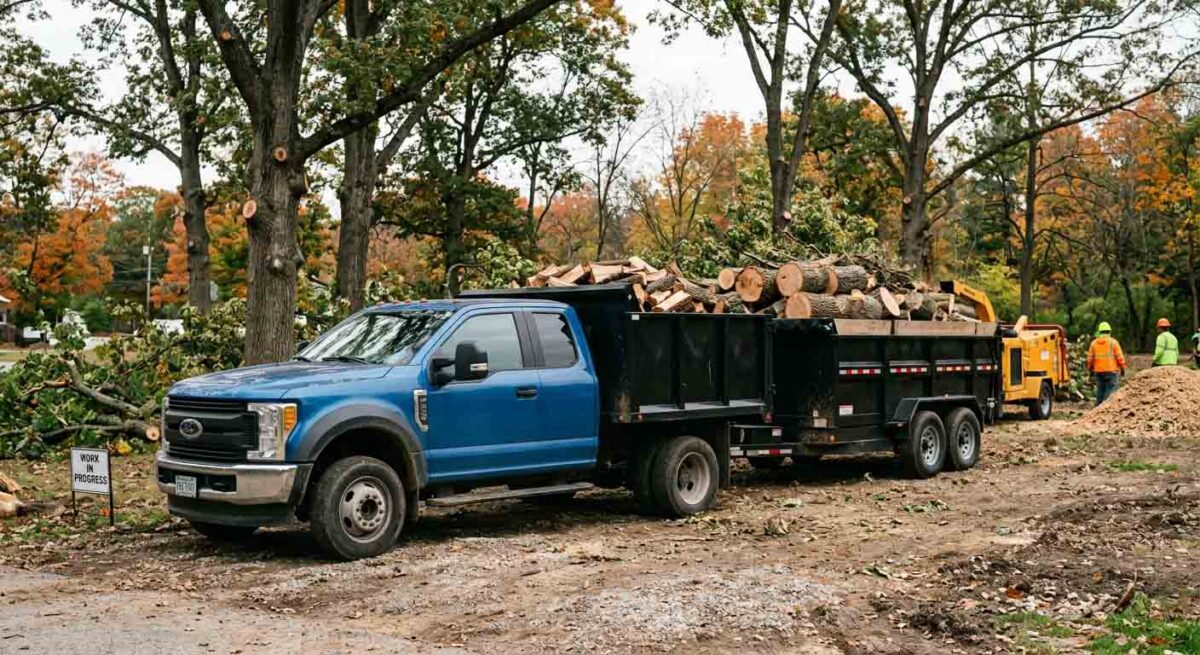
Operating a commercial tree care company across Michigan, Indiana, Illinois, Minnesota, Iowa, and Wisconsin means your crew and equipment are constantly on the move. Whether you are hauling a loaded dump trailer out of a residential neighborhood in Grand Rapids, moving a log splitter between rural jobs in Iowa, or crossing state lines for a major storm cleanup in Minnesota, transport safety is a critical part of daily operations.

When your trucks and trailers are loaded down with heavy timber, brush, and commercial-grade machinery, understanding your commercial auto policy limits and cargo protection is vital to keeping your business moving forward.

The Hidden Hazards of Transporting Heavy Timber

Transporting raw timber and oversized brush places immense strain on your vehicles, hitches, and trailers. Unlike standard cargo, logs shift, settle, and can dramatically alter vehicle handling while in transit.

  • Weight Distribution Challenges: An improperly loaded dump trailer can cause tongue weight issues, leading to sway, reduced braking efficiency, and loss of control on slick Midwestern highways.
  • Securing Heavy Loads: Logs and heavy rounds require heavy-duty tie-downs, chains, and rated binders to prevent shifting during sudden stops or sharp turns.
  • State-to-State Compliance: Because regional tree service operations frequently travel across state lines, drivers must stay compliant with varying regional Department of Transportation (DOT) regulations regarding weight limits, securement standards, and trailer lighting.

How Commercial Auto and Inland Marine Limits Protect Your Fleet

Your trucks and trailers are the engines of your daily revenue. If a loaded trailer jackknifes on an icy Wisconsin interstate or a secured log breaks loose and damages a commercial vehicle, the financial fallout can stall your business.

Reviewing your policy structure ensures your operations remain fully protected:

  • Commercial Auto Physical Damage: Covers repairs or replacement for your primary tow vehicles and trailers if they are involved in a collision or transit accident.
  • Motor Truck Cargo / Inland Marine Coverage: Standard auto policies often have limitations when it comes to the actual timber, equipment, and specialized gear being hauled. Dedicated inland marine protection helps cover tools, chainsaws, rigging gear, and machinery while in transit or on job sites.
  • Non-Owned and Hired Auto: Essential if your crew utilizes personal trucks or rented equipment to haul debris during peak seasonal surges.

Best Practices for Safe Trailer Loading and Transit

Implementing strict loading protocols protects your drivers, reduces wear and tear on your fleet, and keeps your commercial insurance loss runs clean.

  1. Calculate Weight Ratings: Never exceed the Gross Vehicle Weight Rating (GVWR) of your trucks and trailers. Overloaded trailers increase braking distances significantly.
  2. Center the Load: Distribute the heaviest timber over the axles rather than loading all weight toward the front or rear of the trailer bed.
  3. Inspect Tie-Downs Regularly: Check chains, straps, and winch binders before every trip. Weather exposure and heavy timber can cause premature wear on tie-down hardware.
  4. Account for Shifting: Remember that wood loses moisture and shifts as it dries; a load that is secure in the morning may require re-tensioning by the afternoon.

Protect Your Fleet with Tree Trimmers Insurance

Operating a regional tree service requires specialized protection built for the unique demands of arboriculture and land clearing. At Tree Trimmers Insurance, a Division of John Scott Insurance, we understand the operational realities of hauling heavy timber and equipment across Michigan and throughout the Midwest.

Based in Dowagiac, Michigan, our team provides targeted commercial policies designed to match your fleet size and geographic footprint. Call us today at (877) 810-8872 for a free quote, or visit our office at 105 Commercial Street to review your coverage options.

CONTACT TREE TRIMMERS INSURANCE AGENCY

Toll Free: 877-810-8872

Fax: 206-338-4348

E-Mail: info@treetriminsurance.com

Address: 105 Commercial Street | Dowagiac, MI 49047

STATES WE SERVE
Michigan Indiana Illinois
Wisconsin Minnesota Iowa