
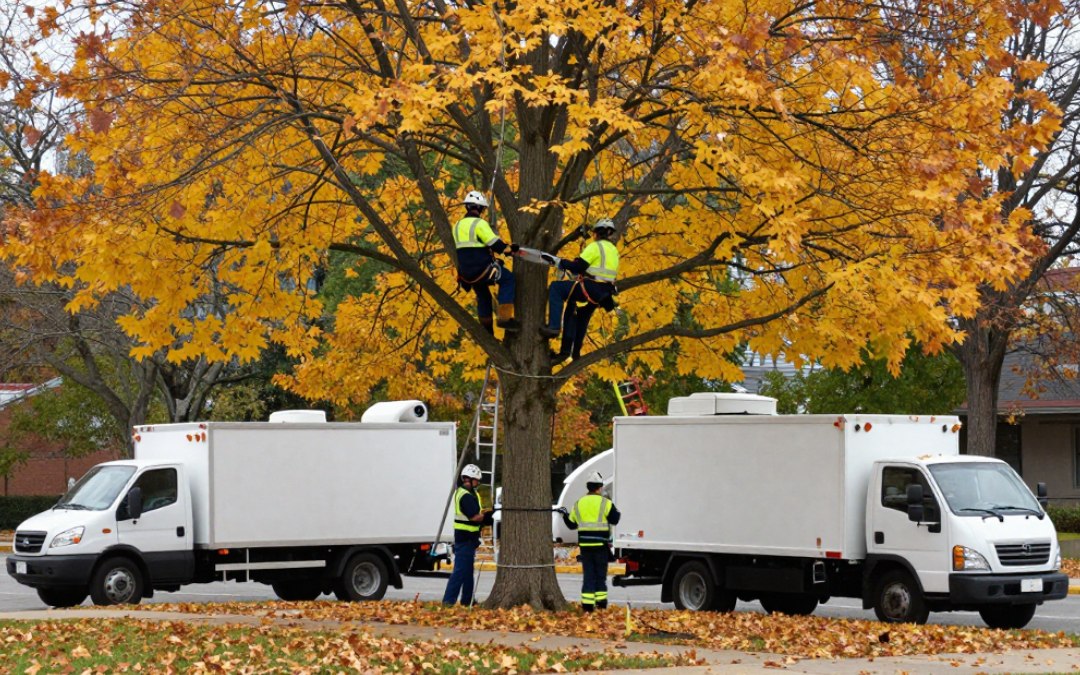
As the autumn leaves begin to peak across Michigan, Indiana, Illinois, Minnesota, Iowa, and Wisconsin, commercial tree service companies enter one of their busiest stretches of the year. Property owners race to clear accumulated yard debris, trim deadwood ahead of winter frost, and manage heavy leaf drop. While peak leaf season brings steady revenue, it also introduces unique operational hazards that can catch unprepared business owners off guard.
Understanding how seasonal workflow shifts impact your commercial insurance protection is critical for safeguarding your company’s bottom line.
The Hidden Liability Risks of Autumn Tree Work
Fall cleanups and seasonal pruning involve high-volume scheduling, rapid debris transport, and frequent property access. During this high-demand window, several distinct risk factors increase your exposure to potential third-party property damage and bodily injury claims:
-
- Increased Foot Traffic & Property Obstacles: Lawns and driveways are often slick with wet leaves, making slip-and-fall hazards more prevalent for both your crew and local residents.
- Proximity to Structures: Homeowners and commercial property managers are eager to clear overhanging branches near roofs, power lines, and fences before winter storms arrive. Tight working quarters elevate the risk of dropped limbs striking buildings or vehicles.
- Heavy Debris Loading: Moving oversized branches and wet leaf piles increases strain on rigging equipment, trailers, and hauling trucks.
-
- Third-Party Property Damage: If a falling limb accidentally damages a client's retaining wall, deck, or vehicle during a pruning job, general liability coverage helps handle repair or replacement costs.
- Bodily Injury Claims: Should a visitor or property occupant slip near your work zone or be struck by falling debris, your policy addresses medical expenses and potential legal liabilities.
- Completed Operations Coverage: Protection doesn't end when your crew leaves the job site. This coverage shields your business from claims arising out of property damage or injury discovered after a project is finished—such as a compromised branch breaking off weeks later.
-
- Verify Aggregate Limits: Ensure your policy limits reflect the scale and frequency of your current autumn project volume. High-turnover seasons mean more job sites, which statistically increases exposure.
- Check Sub-Limits and Exclusions: Carefully review policy language regarding property work near power lines, crane operations, or specialized rigging to avoid coverage gaps.
- Confirm Additional Insured Endorsements: Many commercial and municipal clients require proof of general liability coverage naming them as additional insureds before you step onto their property.
Safeguard Your Operations Today
Don't let seasonal liability risks disrupt your company's growth. To review your current general liability coverage, discuss policy limits, or request a customized insurance quote tailored to your Midwestern tree care operations, contact Tree Trimmers Insurance, a division of John Scott Insurance, or call us at (877) 810-8872.